

Christology: Titles of Jesus

Updated: Sep 1

Introduction
Christology is the study of who Jesus is as the Christ, or Messiah. Both words mean "Anointed One"—Christos in Greek (G5547) and Mashiach in Hebrew (H4899). The New Testament writers gave Jesus many titles to show the different sides of his role as the Messiah. Some people read the Bible and view Jesus as a great Jewish teacher or prophet. For the purposes of this article, low christology refers to interpretations that regard Jesus as merely human, whereas high christology affirms his full deity. Jesus never simply said, "I am God," in the direct form that many contemporary readers expect. Instead, he used words that carried deep meaning for his first-century Jewish audience. When Jesus said, "Very truly I tell you, before Abraham was born, I Am!" (John 8:58), he identified himself with Yahweh (H3068), the one true God of Israel and all nations.

Alpha and Omega
In Revelation, Jesus calls himself the "Alpha and Omega" three times: 1) "I am the Alpha and the Omega, who is, and who was, and who is to come, the Almighty" (Rev. 1:8), 2) "It is done. I am the Alpha and the Omega, the Beginning and the End" (Rev. 21:6), and 3) "I am the Alpha and the Omega, the First and the Last, the Beginning and the End" (Rev. 22:13). The title "Alpha and Omega" refers to the first and last letters of the Greek alphabet. In contemporary English, the expression is much like saying, "Everything from A to Z." Jesus embodies this truth because he is the eternal Lord over all creation, its beginning and its end.
Great High Priest
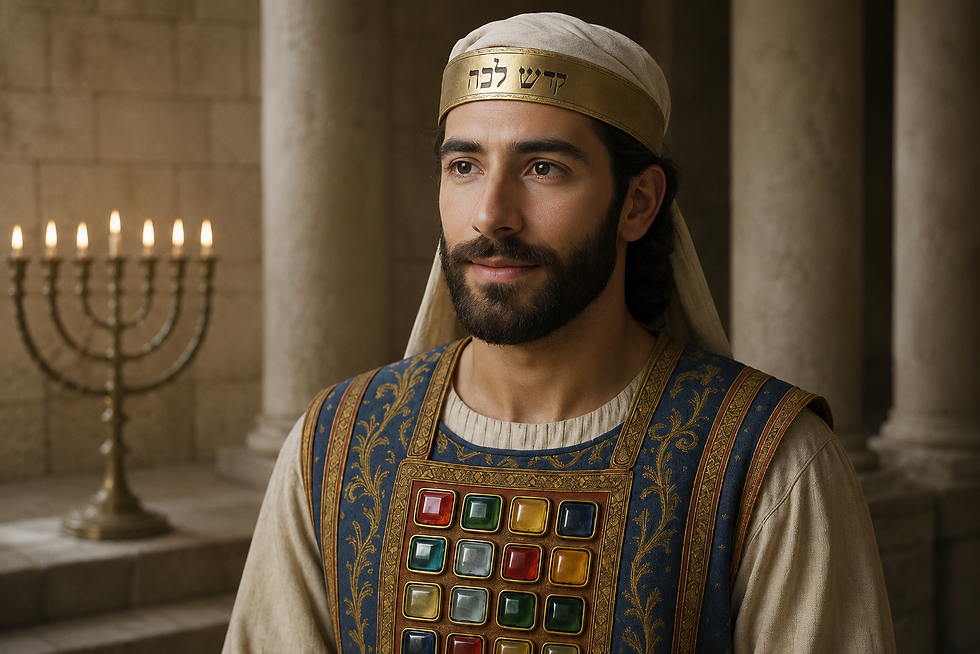
The author of Hebrews writes, "Therefore, since we have a great high priest who has ascended into heaven, Jesus the Son of God, let us hold firmly to the faith we profess" (Heb. 4:14). He also says, "But when Christ came as high priest of the good things that are now already here, he went through the greater and more perfect tabernacle that is not made with human hands, that is to say, is not a part of this creation" (Heb. 9:11). God anointed Jesus to serve as Israel's ultimate high priest—one who perfectly fulfilled the Law of Moses, which declares, "The high priest, the one among his brothers who has had the anointing oil poured on his head and who has been ordained to wear the priestly garments, must not let his hair become unkempt or tear his clothes" (Lev. 21:10). Unlike Aaron's descendants, Jesus' priesthood is grounded not in genealogy but in his indestructible life (Heb. 7:16). Unlike the former high priests of Israel, who served only until death, Jesus serves forever. He did not need to offer sacrifices for his own sins, as other priests did, because he remained sinless. Jesus' priesthood is perfect, eternal, and complete (Heb. 7:23–28).

Holy One of God
The title "Holy One of God" appears only once in the New Testament in a positive context: "Simon Peter answered him, 'Lord, to whom shall we go? You have the words of eternal life. We have come to believe and to know that you are the Holy One of God'" (John 6:68–69). The Greek adjective hagios (G40), often translated as "holy" or "saint," describes something that God sets apart for his divine purposes. The title "Holy One of God" indicates that God appointed Jesus above all others. This title echoes "Holy One of Israel," a frequent Old Testament name for God himself (i.e., Ps. 71:22). Therefore, the term "Holy One" points toward both Jesus' sacred nature and his divinity.

I Am
Critics sometimes argue that Jesus never claimed to be divine. However, Jesus made his identity unmistakably clear when he said, "Very truly I tell you, before Abraham was born, I Am!" (John 8:58). Throughout church history, Christians have understood this statement as identifying Jesus with God's divine name revealed to Moses, YHWH (H3068), which comes from the Hebrew phrase Ehyeh Asher Ehyeh ("I AM WHO I AM," Exod. 3:14). By using the divine name, Jesus claimed eternal existence and equality with God. The Jewish religious leaders recognized the weight of his words and sought to execute him for blasphemy (John 8:59). In doing so, Jesus revealed himself as the same God who spoke to Moses at Mount Sinai.

Immanuel / God with Us
The Hebrew name Immanuel (H6005) means "God with us" and appears only twice in the Old Testament. The prophet Isaiah first recorded it: "Therefore the LORD himself will give you a sign: The virgin will conceive and give birth to a son, and will call him Immanuel" (Isa. 7:14). The evangelist Matthew quoted this prophecy in the New Testament: "All this took place to fulfill what the Lord had said through the prophet: 'The virgin will conceive and give birth to a son, and they will call him Immanuel'" (Matt. 1:22–23). This passage is the foundation of the Christian doctrine of the virgin birth. Scholars debate how to translate the Hebrew noun almah (H5959), which can mean either "young woman" or "virgin." Matthew, however, quoted from the Septuagint, the Greek translation of the Old Testament, which uses the Greek word parthenos (G3933), clearly meaning "virgin." Matthew affirms that God dwells among humankind in the person of Christ when calling him Immanuel. John conveys the same truth when describing how "the Word became flesh and made his dwelling among us" (John 1:14). The Greek verb eskēnōsen (G4637), translated "made his dwelling," literally means "tabernacled." John uses this word to show that, just as God's presence once filled the tabernacle in the wilderness (Exod. 40:34–35), he now dwells among his people in Jesus. Through him, we can approach God with confidence, knowing that he is truly "God with us."

King of the Jews
Christians recognize "King of the Jews" as the title Pontius Pilate gave to Jesus during his trial and crucifixion (John 18:33; 19:3–21). However, the wise men first used this title for the infant Jesus when they saw the star of Bethlehem (Matt. 2:2). It identifies Jesus as both ethnically and religiously Jewish and as the rightful heir to David's throne—the true monarch of Israel. Herod, the Roman-appointed ruler of Judea, took offense at the wise men calling Jesus the "King of the Jews" (Matt. 2:1–12). But Jesus came as the legitimate King by divine right, fulfilling God's covenant with David. In Revelation, this same King appears in full glory as the "King of Kings and Lord of Lords" (Rev. 19:16), ruling not only over Israel but over every nation on earth. His reign fulfills God's promise of an eternal kingdom.

Lamb of God / Good Shepherd
At first glance, calling Jesus both a lamb and a shepherd may seem contradictory. However, these titles describe different aspects of his mission and character. As the Lamb of God, Jesus came to take away the sins of the world (John 1:29, 36). As the Good Shepherd, he revealed himself as the perfect leader who guides and protects his people (John 10:1–14). Together, these titles show that Jesus not only sacrificed himself for his flock but also continues to lead, care for, and defend them as their risen Shepherd.

Logos / Word of God
The evangelist John writes, "In the beginning was the Word, and the Word was with God, and the Word was God" (John 1:1). Many theologians, from the post-apostolic era to the present, have focused on the Greek philosophical meaning of this verse. However, as a Jew, John also echoed the creation account in Genesis 1, where God spoke the universe into existence. As the Word of God, Jesus is the meaning behind all creation:
In the past God spoke to our ancestors through the prophets at many times and in various ways, but in these last days he has spoken to us by his Son, whom he appointed heir of all things, and through whom also he made the universe. The Son is the radiance of God's glory and the exact representation of his being, sustaining all things by his powerful word (Heb. 1:1–3).
The Greek noun Logos (G3056), translated "Word," reveals Jesus as the ultimate source of reason, order, and truth—both moral and physical.
Lord / Master
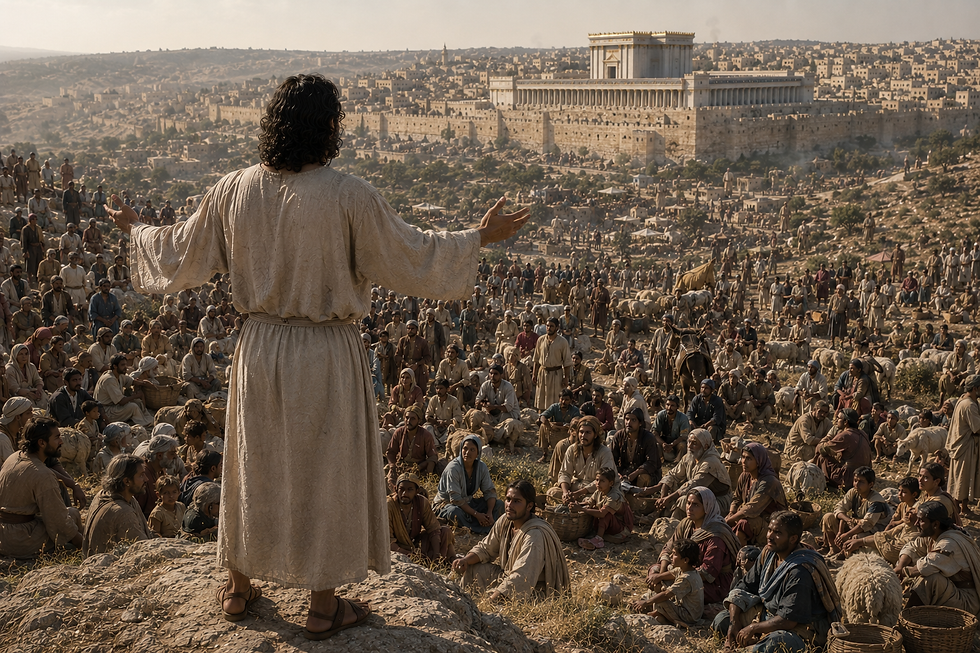
The titles "Lord" and "Master" often carry negative associations today, suggesting domination or abuse. Most contemporary readers no longer experience the kinds of political authority associated with ancient lords and masters; instead, we have supervisors, managers, and elected leaders. In democratic systems, authority depends on merit and accountability, not inheritance. However, when Christians call Jesus "Lord" (Kurios, G2962), they affirm an ancient truth: his authority derives from divine right, not human appointment. His lordship is absolute and eternal. For now, God grants each person the freedom to choose to recognize Jesus as Lord. However, the apostle Paul declares that a day will come when all creation will acknowledge his rule: "Therefore God exalted him to the highest place and gave him the name that is above every name, that at the name of Jesus every knee should bow, in heaven and on earth and under the earth, and every tongue acknowledge that Jesus Christ is Lord, to the glory of God the Father" (Phil. 2:9–11).

Messiah / Christ
The Hebrew Mashiach and the Greek Christos both mean "Anointed One." These terms refer to the sacred anointing ceremony for kings and Levitical priests in ancient Israel, which involved the use of holy oil. The oil's ingredients included myrrh, cinnamon, aromatic cane, cassia, and olive oil (Exod. 30:22–26). Calling Jesus "Messiah" or "Christ" acknowledges both his kingship and his priesthood. Many first-century Jews expected the Messiah to be a political or military leader, but they failed to recognize his priestly mission (John 6:14–16). Even the Roman authorities understood the title Messiah to carry royal implications (John 18:33–37). The author of Hebrews explains this deeper reality: "In the same way, Christ did not take on himself the glory of becoming a high priest. But God said to him, 'You are my Son; today I have become your Father.' And he says in another place, 'You are a priest forever, in the order of Melchizedek'" (Heb. 5:5–6; cf. Ps. 2:7; 110:4). This passage reveals that Jesus' anointing is not symbolic but divine. God himself anointed the Son—not with oil made by human hands, but with the Holy Spirit (Acts 10:38). Unlike Israel's former kings and priests, whose authority ended in death, Jesus' anointing establishes an eternal priesthood and everlasting kingship. He reigns as both the Messiah and the Christ, fulfilling every purpose of God's covenant with Israel.

Paraclete / Advocate / Comforter
The Greek noun Paraklētos (G3875) means "Advocate" or "Comforter." It describes someone who stands beside another person to offer support, counsel, and defense—someone who comes alongside another to help, defend, and intercede. In other words, the Paraclete "gets it right" in life's close calls. Jesus told his disciples that after his ascension, he would send the Paraclete, the Holy Spirit, to guide and strengthen them (John 14:16, 26; 15:26; 16:7). However, John also applies this title to Jesus himself when he wrote: "My dear children, I write this to you so that you will not sin. But if anybody does sin, we have an advocate with the Father—Jesus Christ, the Righteous One. He is the atoning sacrifice for our sins, and not only for ours but also for the sins of the whole world" (1 John 2:1–2). This shared work of advocacy reveals the perfect unity within the Trinity. The Son and the Spirit do not act independently but in complete harmony with the Father's will. Jesus intercedes for believers in heaven, while the Holy Spirit applies that intercession on earth, strengthening and guiding God's people. Together, they demonstrate that divine love and justice flow from one source—the triune God who redeems, sustains, and dwells with us.

Prophet
The Greek noun prophētēs (G4396) refers to one who speaks on behalf of another, especially as God's spokesman. In the ancient world, this word described someone who spoke on behalf of a king or political leader. Such a role carried significant risk: if a messenger failed to deliver peace terms or misrepresented his ruler, he could be executed for treason. Likewise, under the Law of Moses, false prophets faced the death penalty (Deut. 13:5). In Israel, a prophet served as God's spokesperson, and the Lord strictly forbade them from altering his message. Jesus stands as the most righteous prophet, never speaking on his own authority but always declaring the will of the Father (John 5:30–47). Scripture clearly distinguishes between true and false prophets. Concerning the false, God says: "If what a prophet proclaims in the name of the LORD does not take place or come true, that is a message the LORD has not spoken. That prophet has spoken presumptuously, so do not be alarmed" (Deut. 18:22). The apostle Peter explicitly identifies Jesus as "the prophet like Moses" (Acts 3:22–23). About the true prophet, God says, "But the prophet who prophesies peace will be recognized as one truly sent by the LORD only if his prediction comes true" (Jer. 28:9).

Rabbi / Teacher
The Hebrew noun rabbi (from the verb rabab, H7231) means "great in number," referring to the vast knowledge accumulated by a Jewish teacher. Even today, rabbis spend many years in yeshiva or seminary studying the whole body of Jewish written tradition. Christians sometimes assume that Jesus did not need formal study, yet Scripture shows him engaging deeply with the Law and the Prophets. At only twelve years old, he sat among the teachers in the temple, "listening to them and asking them questions," and all who heard him were amazed at his understanding (Luke 2:46–47). There is no contradiction in affirming that Jesus' rabbinical education reflects his human nature, while his perfect knowledge of God's truth reveals his divine nature. As a rabbi, Jesus is the ultimate teacher—one whose wisdom surpasses all others and whose authority extends to every nation and every generation.

Savior / Redeemer
The titles "Savior" and "Redeemer" raise the essential question: "From what does Jesus save and redeem us?" Many would answer quickly, "from hell," yet salvation involves far more than avoiding eternal punishment. True salvation means being restored to a right relationship with God, our Creator and Sustainer. Paul explains:
But God demonstrates his own love for us in this: While we were still sinners, Christ died for us. Since we have now been justified by his blood, how much more shall we be saved from God's wrath through him! For if, while we were God's enemies, we were reconciled to him through the death of his Son, how much more, having been reconciled, shall we be saved through his life! (Rom. 5:8–10).
Many people assume they deserve God's steadfast love, yet Scripture reveals that we stand deserving of his justice (Rom. 3:9–20). Yet by grace, God offers forgiveness and reconciliation through Jesus Christ, allowing us to approach him without fear. The Greek noun Sōtēr (G4990), meaning "Savior," "Deliverer," or "Preserver," derives from the verb sōzō (G4982), which can mean "to save," "to heal," or "to make whole" (Matt. 1:21; 9:22). Therefore, Jesus not only delivers us from sin and death but also makes us whole and reconciles us to God.

Son of David
The messianic title "Son of David" refers to King David of ancient Israel and to the royal line that descended from him. It also points to Jesus' literal genealogy and the divine authority entrusted to him as the promised heir to David's throne (Matt. 1:1; 12:23; 21:9; 22:42; Luke 1:32). This title fulfills God's covenant with David, in which he promised that David's offspring would establish an everlasting kingdom (2 Sam. 7:12–16), a prophecy realized in the reign of Christ the eternal King.

Son of God
When we call Jesus the "Son of God," we should not assume that the title necessarily refers to his divinity. The phrase "son of God" appears in several Old Testament contexts:
Sons of God took wives from human women, often seen as heavenly beings (Gen. 6:2–4).
God called Israel his "firstborn son," speaking to Pharaoh through Moses (Exod. 4:22).
God set apart Israel as his chosen people and called them his sons (Deut. 14:1–2).
The heavenly council of angels appeared before the Lord as sons of God (Job 1:6; 2:1).
God called King Solomon his son, affirming the covenant with David's line (2 Sam. 7:14).
God said, "Out of Egypt I called my son," describing Israel's deliverance (Hos. 11:1).
The New Testament writers, however, use the title "Son of God" in a different, higher sense. They identified Jesus as the Son of God par excellence—the unique Son who shares the Father's divine nature. He is the "one and only Son of God" (Greek: monogenēs Huios tou Theou, G3439 / G5207 / G3588 / G2316), meaning his relationship with God is unlike that of any angel, king, or nation. John confirmed this truth when he wrote, "Whoever believes in him is not condemned, but whoever does not believe stands condemned already because they have not believed in the name of God's one and only Son" (John 3:18). As the eternal Son of God, Jesus has always existed with the Father and the Holy Spirit—one God in three persons, equal in power and glory.

Son of Man
The title "Son of Man" was Jesus' favorite self-designation in the gospels. The title simultaneously highlights Jesus' humanity and identifies him with Daniel's heavenly Son of Man, who receives everlasting dominion. "Son of Man" translates the Hebrew phrase Ben Adam (H1121 / H120; lit. "son of Adam"). However, the prophet Daniel used the Aramaic expression Bar Enash (H1247 / H606) when he recorded his vision:
In my vision at night I looked, and there before me was one like a son of man, coming with the clouds of heaven. He approached the Ancient of Days and was led into his presence. He was given authority, glory and sovereign power; all nations and peoples of every language worshiped him. His dominion is an everlasting dominion that will not pass away, and his kingdom is one that will never be destroyed (Dan. 7:13–14).
Jesus preferred the title "Son of Man" because it best expressed his role in inaugurating God's kingdom and revealed the apocalyptic scope of his mission as Messiah. He illustrated this truth in the parable of the weeds among the wheat: "As the weeds are pulled up and burned in the fire, so it will be at the end of the age. The Son of Man will send out his angels, and they will weed out of his kingdom everything that causes sin and all who do evil. They will throw them into the blazing furnace, where there will be weeping and gnashing of teeth" (Matt. 13:40–42).

Son of Mary (As a Title of Christology)
Only one verse in the New Testament identifies Jesus as "Mary's son." In it, the people ask, 'Isn't this the carpenter? Isn't this Mary's son and the brother of James, Joseph, Judas and Simon? Aren't his sisters here with us?' And they took offense at him" (Mark 6:3). They took offense because he spoke and acted with divine authority. The title later took on theological significance in Christian doctrine. In AD 451, church leaders at the Council of Chalcedon affirmed that Jesus is both fully God and fully man. They affirmed Mary as Theotokos (G2316 / G5110), a Greek title meaning "God-bearer," to emphasize that the one she bore was not merely human but the eternal Son of God incarnate—equal with the Father in divinity and united with humanity in one person (see "Confessions of Faith"). By calling Jesus the "Son of Mary," the church confesses the mystery of the incarnation: that in one person, Jesus Christ, the divine and human natures are perfectly united—without confusion, change, division, or separation (cf. John 1:14; Phil. 2:6–8).

Suffering Servant
One major reason many Jews do not accept Jesus as the Messiah is that they interpret the suffering servant passages differently from Christians. We draw this concept from the prophet Isaiah, who described God's servant as one who would suffer and bear the sins of many (Isa. 52:13–53:12). This interpretation is not a Christian invention. In the Acts of the Apostles, Philip read this very passage to the Ethiopian eunuch and explained that Isaiah had written about Jesus, the suffering Messiah (Acts 8:26–40). Many Jews in the first century, living under the rule of four successive empires, understood Isaiah's servant collectively as Israel and anticipated a political or military deliverer who would overthrow their oppressors and restore the kingdom. The early church, however, recognized that the Messiah's victory would come first through humility, suffering, and sacrifice before the consummation of his kingdom. Jesus offered his own life to save not only Israel but all humanity—this is the gospel we proclaim.
Bibliography
Monographs
Bauckham, Richard. Jesus and the God of Israel: God Crucified and Other Studies on the New Testament's Christology of Divine Identity. Grand Rapids: Eerdmans, 2008.
Hurtado, Larry W. Lord Jesus Christ: Devotion to Jesus in Earliest Christianity. Grand Rapids: Eerdmans, 2003.
Lewis, C. S. Mere Christianity. C. S. Lewis Signature Classics. New York: HarperOne, 2009.
Macleod, Donald. The Person of Christ. Downers Grove, IL: InterVarsity, 1998.
Rosner, Jennifer M. Finding Messiah: A Journey Into the Jewishness of the Gospel. Downers Grove, IL: IVP, 2022.
Strauss, Mark L. Four Portraits, One Jesus: A Survey of Jesus and the Gospels. 2nd ed. Grand Rapids: Zondervan, 2020.
Wright, N. T., and Michael F. Bird. The New Testament in Its World: An Introduction to the History, Literature, and Theology of the First Christians. Grand Rapids: Zondervan, 2019.
Online Resources
Bivin, David N. "'Prophet' as a Messianic Title."↗ Jerusalem Perspective. November 27, 2015.
Buth, Randall. "'Son of Man': Jesus' Most Important Title."↗ Jerusalem Perspective. August 9, 2022.


